Breeding is a decision.
Building a program is a process.
At Harbinger, the puppy you take home is the visible result of work that began long before the litter was born: evaluating dogs, studying pedigrees, considering health, structure and temperament, raising puppies intentionally, and learning the individual puppy in front of us.
Responsible breeding is not one test, one title, one litter or one photograph. It is a series of decisions made with the next generation in mind.
Our goal is not simply to produce Miniature Schnauzer puppies. It is to preserve the qualities that make the breed recognizable, functional and dependable while preparing each puppy for the life waiting beyond our home.
What happens before a puppy goes home.
Our program can be understood as five connected stages. Each one informs the next.
Purposeful Pairings
Pedigree, structure, temperament, health information and long-term program goals are considered before a breeding is planned.
Objective Evaluation
Conformation gives us outside evaluation of how our dogs compare with the breed standard. Titles are evidence—not the entire decision.
Intentional Rearing
Puppies receive age-appropriate neurological, sensory, social, environmental, handling and training experiences.
Individual Observation
We watch confidence, curiosity, engagement, recovery, independence, adaptability and learning style—not just completed exposures.
Thoughtful Transition
Placement and go-home preparation are designed to create continuity between breeder-directed development and family-directed development.
Every pairing should have a reason.
A litter is not planned because two dogs are available. Each breeding is considered in the context of the dogs themselves and the program we are trying to carry forward.
We look beyond a single trait. Structure, temperament, pedigree, health information, strengths, limitations and what each dog may contribute to the next generation all belong in the decision.
That is the difference between producing puppies and developing a breeding program: the decision is made with generations—not simply the next litter—in mind.
Why we show our dogs.
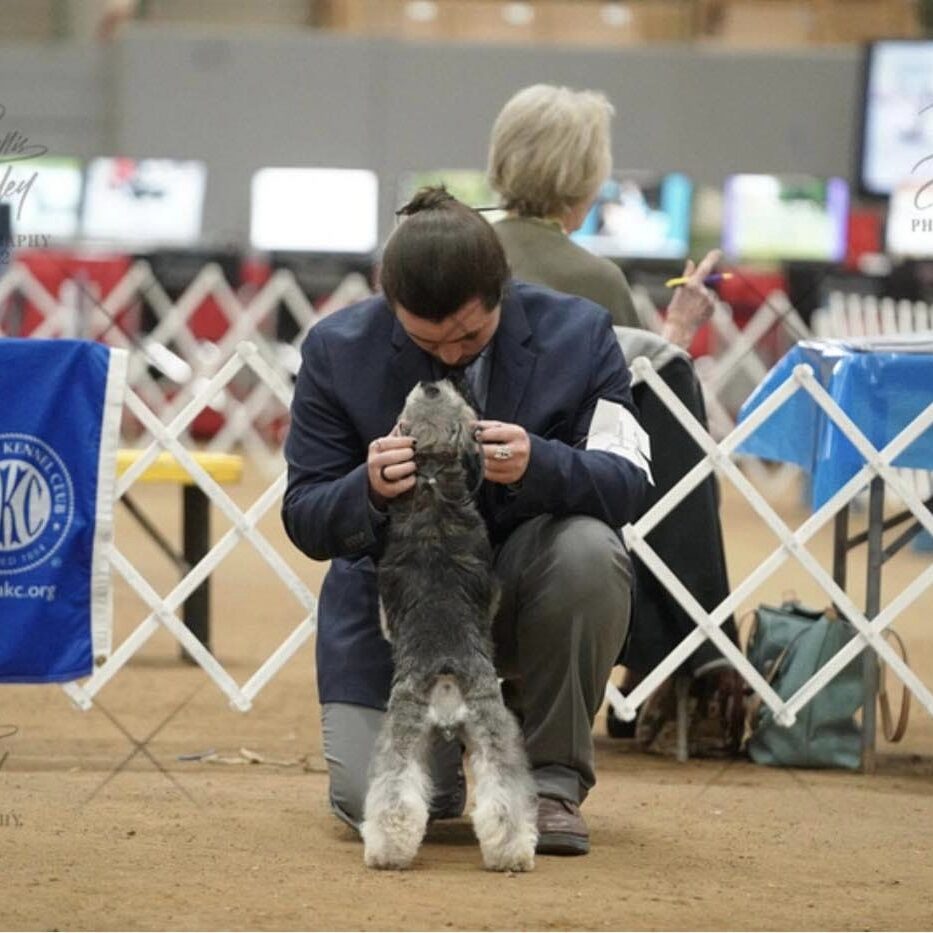
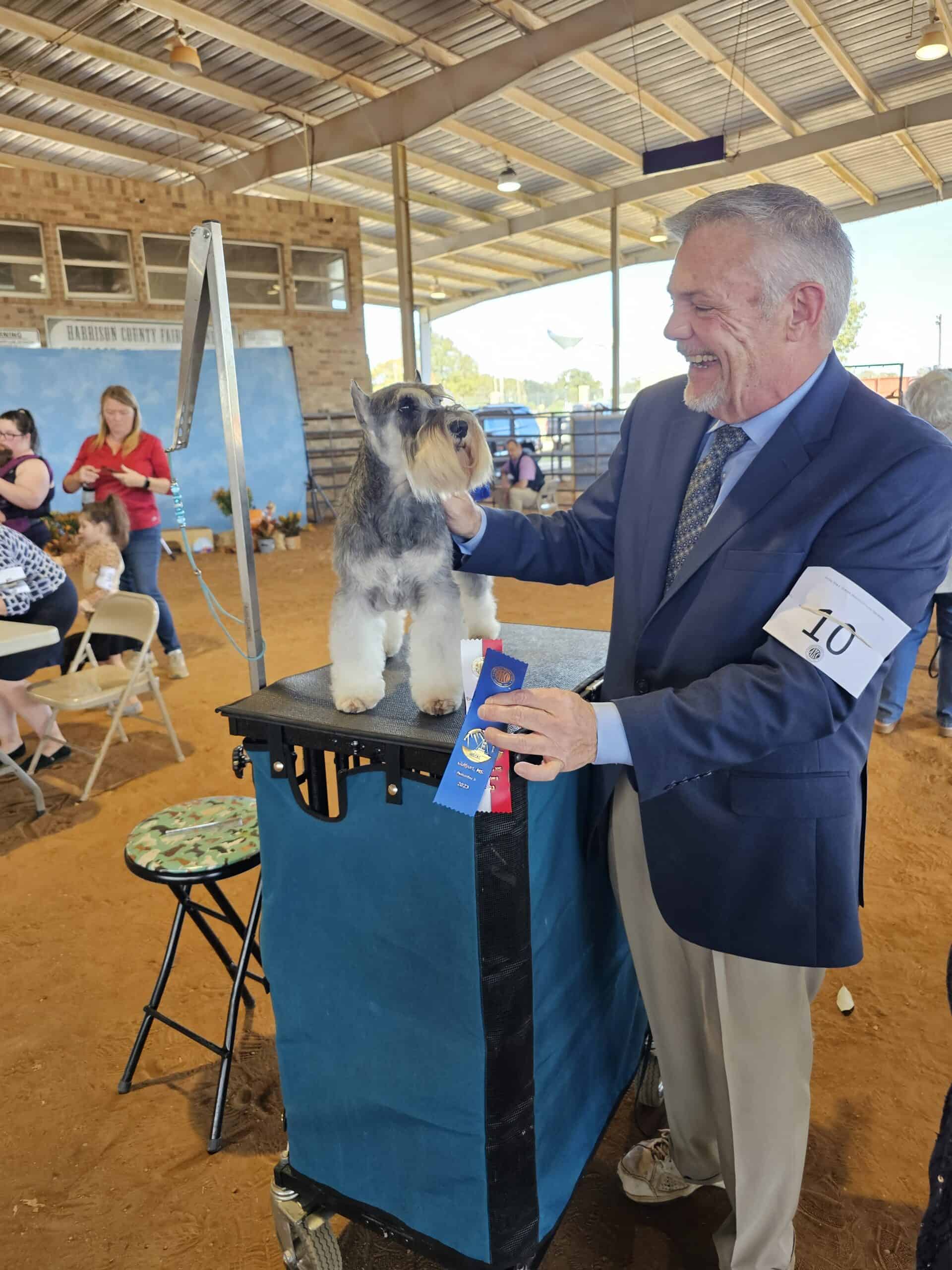
Conformation is not simply about collecting ribbons. It places our dogs in front of independent judges and asks a public question: how closely does this dog represent the Miniature Schnauzer breed standard?
That evaluation matters because structure is not only an aesthetic subject. Correct proportions, movement and breed type contribute information that helps us make more informed breeding decisions.
A title does not make a breeding dog by itself. It is one piece of objective evidence inside a larger evaluation of the whole dog.
Testing matters. So does everything around it.
Health screening is part of responsible breeding, but no single result can tell you whether a breeder is making responsible decisions. We evaluate the whole dog and the purpose of the pairing.
Health
We use breed-relevant health information as part of breeding decisions and provide families with documentation applicable to their puppy and its parents.
Structure
We consider breed type, balance, movement and physical soundness rather than treating appearance as separate from function.
Temperament
Temperament is observed across generations and through daily life—not reduced to a single test or one impressive moment.
Pedigree
We consider the dogs behind the individual because responsible breeding depends on understanding more than what is visible in front of us today.
Specific health testing and documentation can change as dogs, recommendations and breeding plans change. For current information on a planned litter, ask us about the sire and dam being considered.
The weeks matter. What we do with them matters more.
Harbinger uses the weeks a puppy is with us intentionally: building security, expanding the puppy’s world, introducing life skills and observing the individual dog.
Predictable routines, familiar caregivers, rest and a known environment create a stable base for learning.
New surfaces, people, sounds, environments, vehicle experiences, grooming equipment and age-appropriate challenges expand the puppy’s world.
We watch what happens after uncertainty or mild surprise: can the puppy investigate, re-engage and return to normal behavior?
Individual training, crate work, settling and time away from littermates help the puppy learn to function as an individual dog.
Feet, nails, ears, mouth, beard, body, brushing, combing and grooming-table preparation begin before lifelong grooming becomes the family’s responsibility.
Name response, recall, following, engagement, manding, leash introduction, crate skills, settling and brief impulse-control work are developed at an age-appropriate level.
We observe the puppy—not the checklist.
Putting a puppy near something new does not tell us whether the experience was useful. What matters is what the puppy does with it.
Did the puppy register the new person, sound, surface or environment?
Did the puppy approach, pause, startle, retreat, investigate or seek support?
Could the puppy return to the environment, person or task after uncertainty?
How quickly did normal behavior return, and what should the next experience look like?
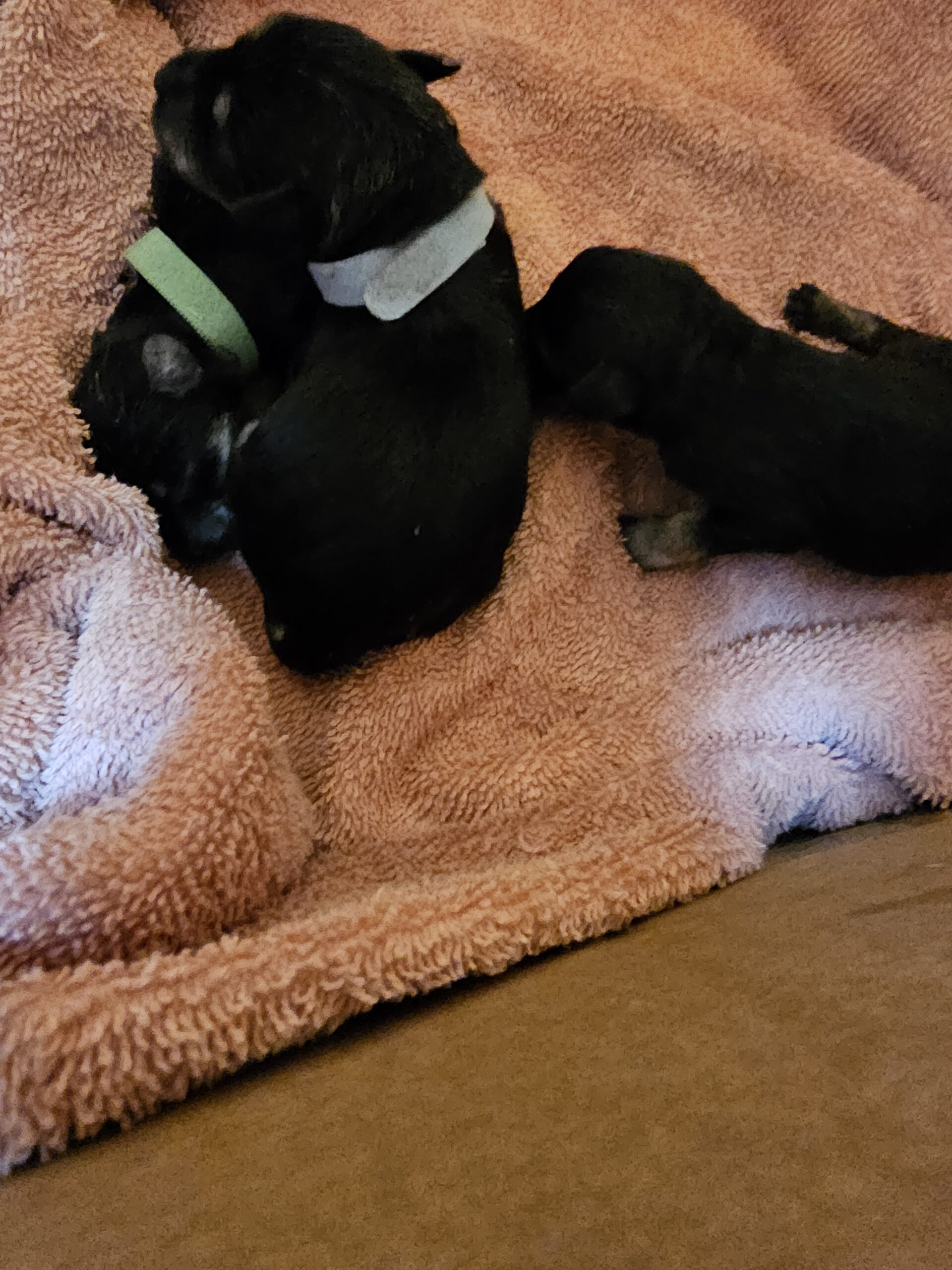
We are matching a puppy to a life—not assigning a color and a pickup date.
Puppies from the same litter can process the world very differently. One may investigate immediately. Another may pause, observe and then engage. Neither response should automatically be treated as better.
Those differences help us continue learning each puppy and can inform placement when we consider the family waiting on the other side.
- Confidence and environmental sensitivity
- Activity level and ability to settle
- Human orientation and independence
- Recovery and adaptability
- Persistence and learning style
- Family lifestyle and experience
Go-home is not the end of development.
It is the transition from breeder-directed development to family-directed development.
Families should know what their puppy has already experienced, what skills are developing, where the puppy is confident, where progression should be slower and what should continue after placement.
That continuity matters. The family should know where Harbinger stopped so they know where to begin.
Choose the program before you choose the puppy.
If Harbinger’s approach matches what you want from a breeder, explore our upcoming litters or start with the questions every family should ask before sending a deposit.